
Most stories are told to you. Movies, books, TV shows - you sit back, watch or read, and take it all in.
But what if you could step into the story? What if you were the main character, making the choices, changing the outcome, saving the day?
That's what tabletop role-playing games (TTRPGs) are all about. They're far more than just games - they're interactive stories shaped by the players, crafted by a game master, and dictated by dice.
https://www.youtube.com/watch?v=JpVJZrabMQE
What is a TTRPG?
As a player, you are a character in the story. You decide what your character does, what their motivations are, their likes, their dislikes - everything about them. You and your friends around the table create a story together.
It's similar to the Choose-Your-Own-Adventure books from back in the day, but you decide everything, not just a few choices. It's also kind of like a video game RPG, but with infinite choices and no scripted dialogue.
Around the table there are players and a Game Master (GM). The GM (also called a dungeon master in D&D) sets the stage for everything - describing the world, deciding the challenges, and playing the non-player characters (NPCs). That's usually me at the table.
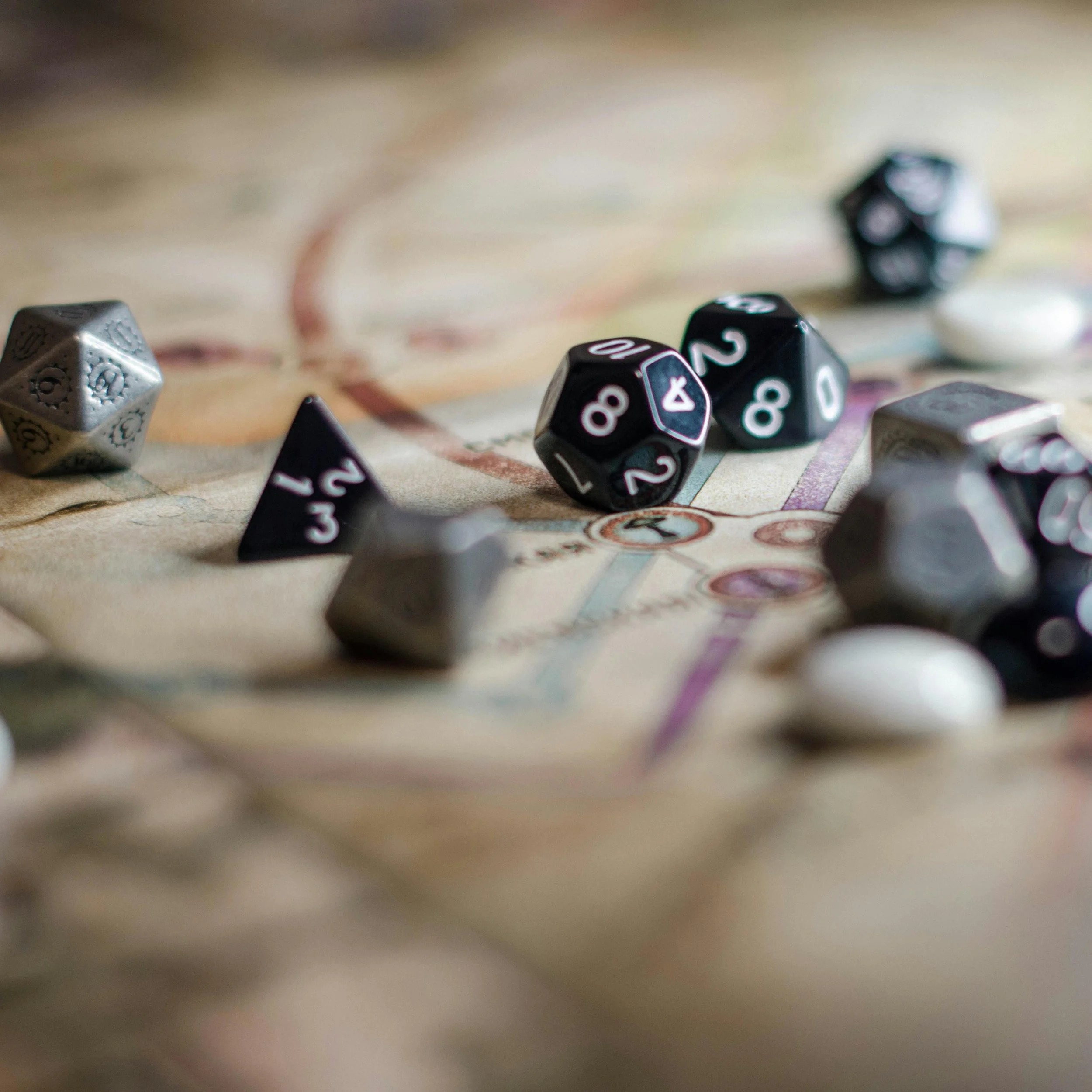
There's also rolling dice, which is half the fun. Depending on the action, setting, or game, the GM will have you roll for a specific action, and the number you roll is how successful (or unsuccessful) you are. The story unfolds from there. A common joke in the community is that you're just friends fighting monsters with math. It's a ton of fun.
Every TTRPG has different rules, settings, and styles, but they all share the same core idea:
- You are part of the story.
- Your choices shape what happens next.
- No two games are ever the same.
A lot of what I run are one-shots - sessions that aren't part of a larger campaign. Most home groups have campaigns that run for years, sometimes decades. Many fall victim to the number one enemy of TTRPGs: life and scheduling conflicts. Think of it like this:
- Sessions are episodes.
- Campaigns are seasons.
Why I Love TTRPGs
Over the last few years I've fallen in love with TTRPGs. I've always enjoyed writing and hoped to write a book one day - and I still might - but running games for people has given me the chance to craft hundreds of stories. I love that it never gets old, even when it's the same story.
For Shadowdark, I've run a scenario called Trial of the Slime Lord probably more than 25 times over the last few years. Not a single session has been the same. Every group and every player does things differently, and I'm always surprised by their ideas and how they approach problems.
The community is full of wonderful people. It's a kind of escape, and even therapy, for a lot of us. When you sit at the table you're no longer a paramedic, a box sorter, a project manager, or a stay-at-home parent. Instead, for a few hours, you get to be someone like:
- Rurik Blackbrand, Dwarven Fighter - once a proud soldier, now a mercenary-for-hire with a drinking problem and an ironclad moral code.
- Eldrin Valcrest, Elven Paladin - a devoted knight on a sacred quest, torn between duty and personal loyalty.
- Kairos Thorn, Tiefling Bard - a silver-tongued performer with a bounty on their head, living for chaos, music, and adventure.
- Osric Fenwick, Human Wizard - a former scribe's apprentice who stole a spellbook and is just now realizing he has no idea how half the spells work.
- Sienna Lockewood, Halfling Ranger - raised by wolves after a fire destroyed her village, now hunting the cult responsible.
I'm honored to get a few hours of someone's time to craft a story together. Everyone deserves a seat at the table.
The Impact of TTRPGs
Tabletop RPGs are more than just games - they're a unique form of storytelling, social connection, and personal creativity that no other medium fully replicates.
- They bring stories to life. You're not just reading or watching - you're living it. Every session becomes a shared tale you'll talk about for years.
- They build friendships and community. Whether with old friends or strangers at a convention, TTRPGs bring people together.
- They encourage creativity and problem-solving. You invent solutions on the fly and the game rewards imagination.
- They teach you to embrace uncertainty. No matter how well you plan, the dice have the final say.
Now What?
At the end of the day, TTRPGs aren't just about rules and dice. They're about stories, choices, and the people you share them with.
If you're already a player, what's a moment from a game that's stuck with you? If you've never played before, what's stopping you? Reach out if you need help getting started - and as always, be careful out there.