
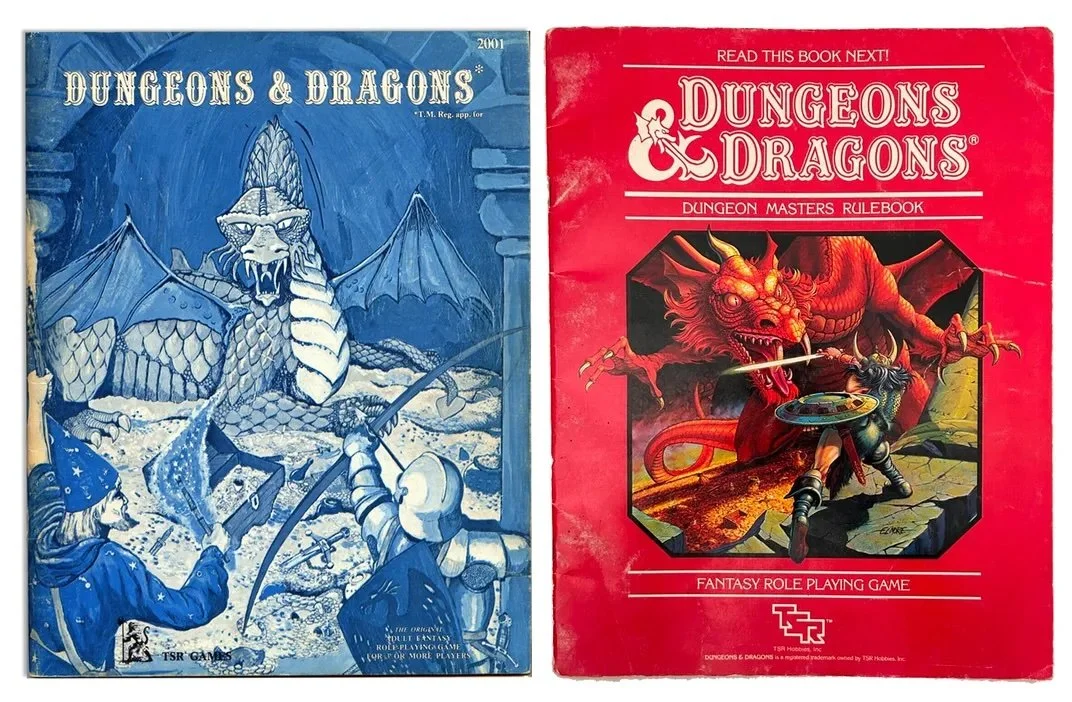
You've probably heard of Dungeons & Dragons - through a podcast, a Stranger Things episode, or that one coworker who always talks about their gnome bard. When people say "D&D," they might also call it "DnD," "5e," or just "that game with dice and dragons."
These days, a lot of people use "D&D" as a catch-all for tabletop role-playing games. If someone says they're "playing DnD," they might be using Dungeons & Dragons rules - or they might be playing something totally different, like ShadowDark, Dragonbane, or Monster of the Week. For newcomers, D&D is just the word they've heard before, and that's okay.
If you're a longtime player, be kind. The feelings they're chasing are the same ones that brought us all to the table in the first place.
The Origin Story: How It All Began
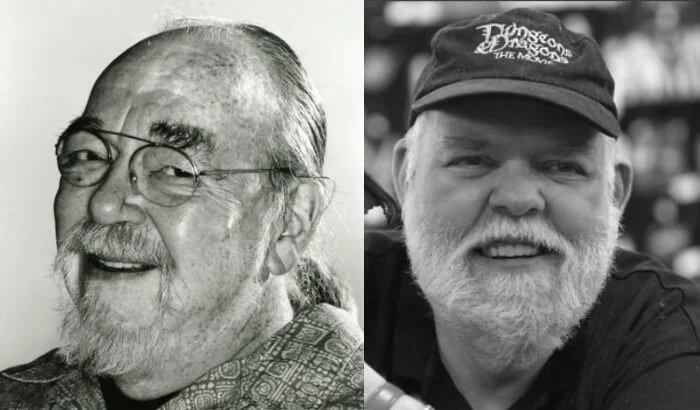
In 1974, Gary Gygax and Dave Arneson created a game that blended miniature wargaming with fantasy storytelling. The result was Dungeons & Dragons, published by TSR. It was clunky, crunchy, and hard to learn - but totally unique. Those early booklets were hand-assembled, mail-ordered, and deeply influential.
While Gary Gygax is the name most associated with the creation of D&D, he wasn't alone. Dave Arneson, often overlooked, co-developed the earliest ideas of character-driven fantasy adventures - what we now think of as the dungeon crawl. Arneson's Blackmoor campaign was arguably the first true TTRPG.
When Gygax and Arneson were building D&D, they drew on a stew of influences:
- J.R.R. Tolkien - elves, dwarves, orcs, rangers, wizards, and magic swords. The ideal adventuring party is the Fellowship.
- Pulp fantasy authors like Robert E. Howard (Conan), Michael Moorcock (Elric), Fritz Leiber, and Jack Vance (whose magic system inspired "Vancian" spellcasting).
- Miniature wargames - especially Chainmail, the ruleset D&D grew out of.
- Westerns, horror, sci-fi, and classic myths - D&D quickly grew beyond medieval fantasy.
Controversy & Growth: The Satanic Panic Years
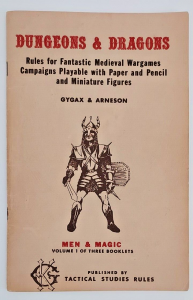
As D&D gained popularity in the late '70s and early '80s, it also gained national attention - not the good kind. Parents, churches, and media outlets painted it as dangerous, claiming it promoted witchcraft, violence, and the occult. At the height of the panic, news reports and made-for-TV movies warned of teens vanishing into fantasy worlds.
https://www.youtube.com/watch?v=ATUpSPj0x-c
The truth? D&D was no more dangerous than a game of Monopoly. But the backlash gave it mystique, and TSR leaned in with darker settings like Ravenloft, Planescape, and Dark Sun.
What was intended to scare people away actually pulled more folks in.
Enter Wizards of the Coast
By the mid-1990s, TSR was in financial trouble. In 1997, the company was purchased by Wizards of the Coast (WotC), riding high on Magic: The Gathering. With D&D under its wing, Wizards released 3rd Edition in 2000 and introduced the d20 System - roll a d20, add modifiers, beat a target number. It made the game easier to learn and, thanks to the Open Game License (OGL), sparked an explosion of third-party content.
The Editions: A Quick Breakdown
| Edition | Year | What Changed |
|---|---|---|
| 1st Edition | 1974 | The OG. Built from wargaming roots - rules-light, imagination-heavy. |
| 2nd Edition | 1989 | Streamlined mechanics, tons of campaign settings, leaned into roleplay. |
| 3rd / 3.5 | 2000 / 2003 | Huge overhaul. Skills, feats, multiclassing, the d20 System, and the OGL boom. |
| 4th Edition | 2008 | A bold, tactical, grid-based shift. Divisive. |
| 5th Edition | 2014 | The "gateway" edition - simplified, narrative, accessible. |
| 5e (2024) | 2024 | A modern refresh under the "One D&D" initiative. |
The OGL Debacle
In early 2023, Wizards found itself in a PR inferno of its own making. Leaked documents revealed plans to revoke the original OGL 1.0a, introduce a more restrictive license, and claim greater control over third-party content. The backlash was immediate and brutal - #OpenDND trended, subscriptions were canceled, and publishers announced plans to move away from D&D.
Wizards eventually apologized and walked it back, releasing portions of the 5e SRD under Creative Commons. But the trust was harder to recover. The drama sparked a wave of creative independence: Kobold Press announced Tales of the Valiant, MCDM began building its own system, ShadowDark and Knave 2e gained massive attention, and the ORC License was introduced by Paizo and allies.
D&D may still be the biggest name in the space, but it no longer owns the table.
D&D in Pop Culture: From Basement to Blockbuster
Over the last decade, D&D has gone from nerdy niche to mainstream - largely thanks to actual-play shows.
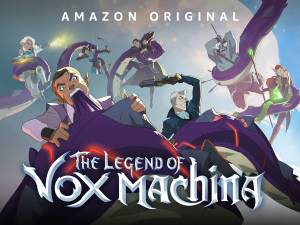
The most famous, Critical Role, grew from voice actors in a living room into a media empire with an animated series and its own publishing imprint. Other standouts like Dimension 20, The Adventure Zone, and Tales From The Stinky Dragon proved TTRPGs can be funny, emotional, cinematic, and bingeable.
For many new players, their first experience with D&D isn't playing - it's watching others play really, really well.
So… What Is D&D Now?
Dungeons & Dragons is a lot of things: a game, a brand, a storytelling tool, and a pop-culture icon. It's also a corporate product owned by Wizards of the Coast and Hasbro, which means it's shaped by market trends and executive decisions, not just player passion. It's not unusual to find players who adore the game but are frustrated with the company behind it.
D&D is the doorway, but it's not the whole house. You can walk through and stay awhile, or find your way to another room entirely.
It has changed hands, survived controversies, and reshaped itself over the decades - but at its core, it's still about storytelling, imagination, and shared experience. Wherever you land, it's all part of the same adventure. Be curious. Try something new. And as always, be careful out there.